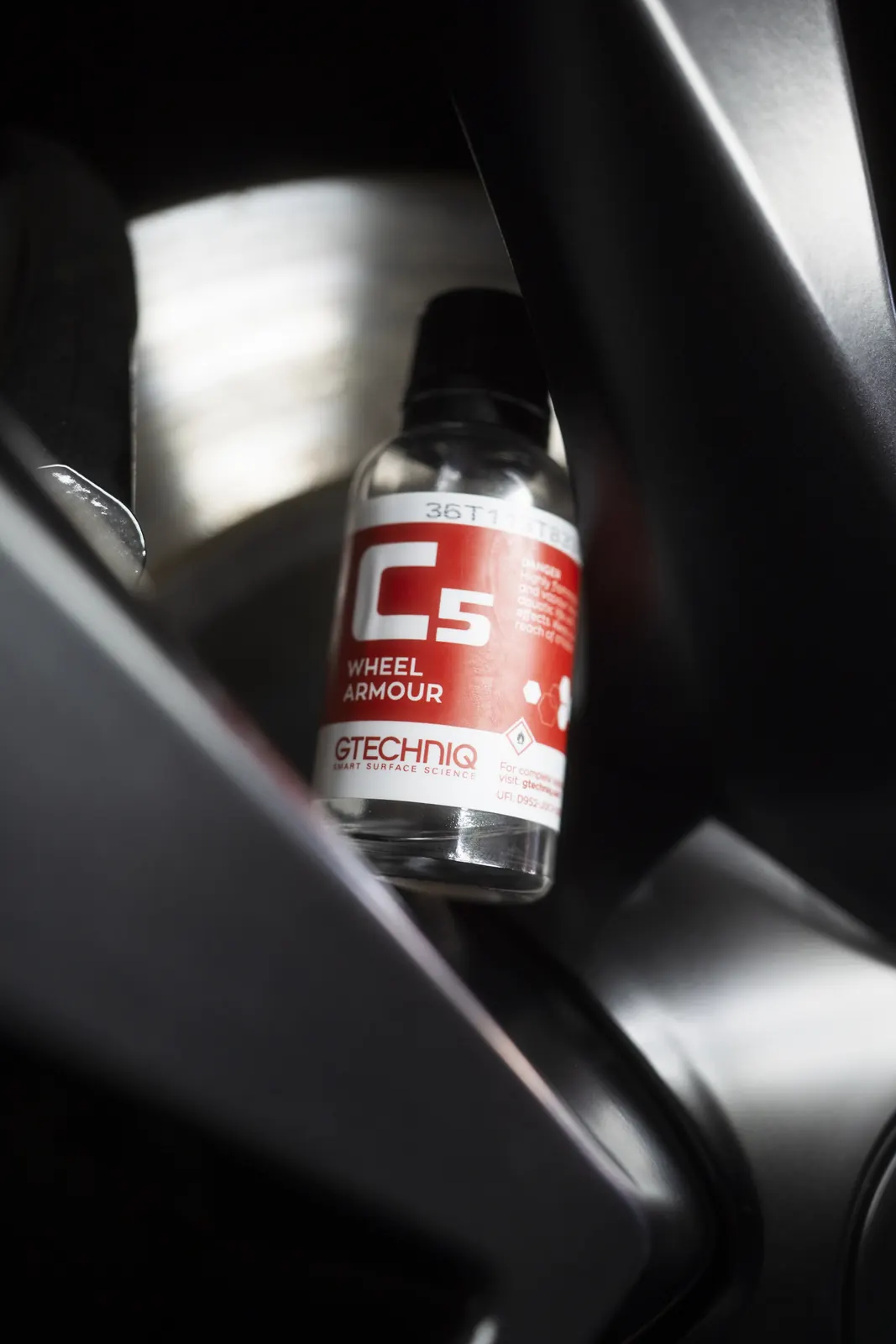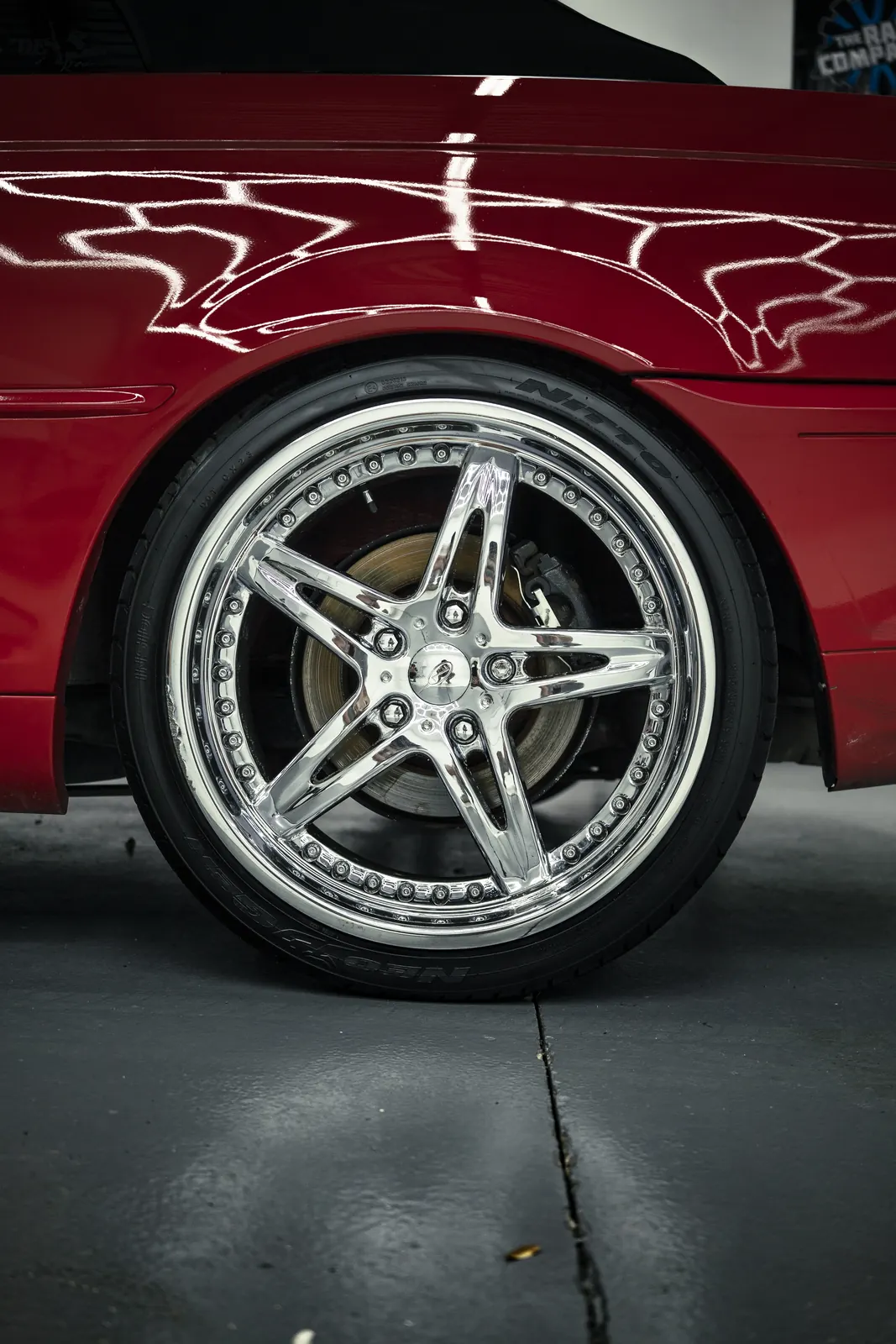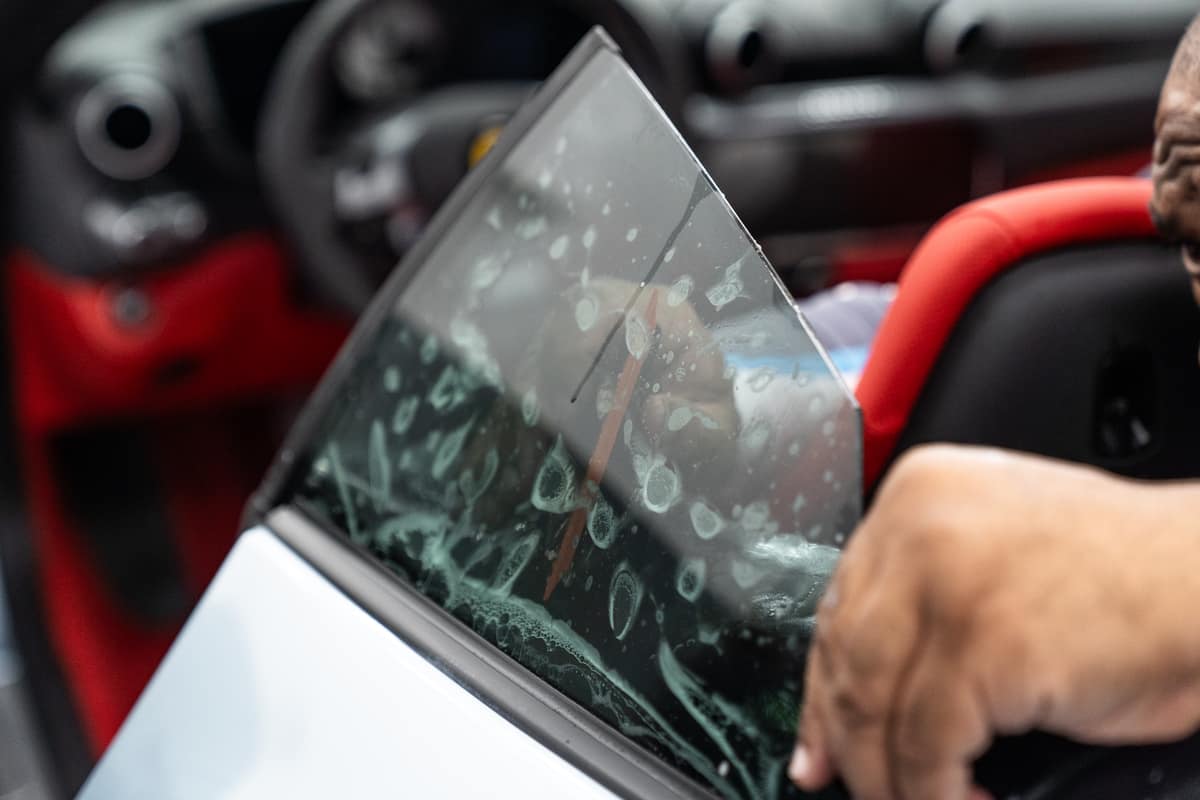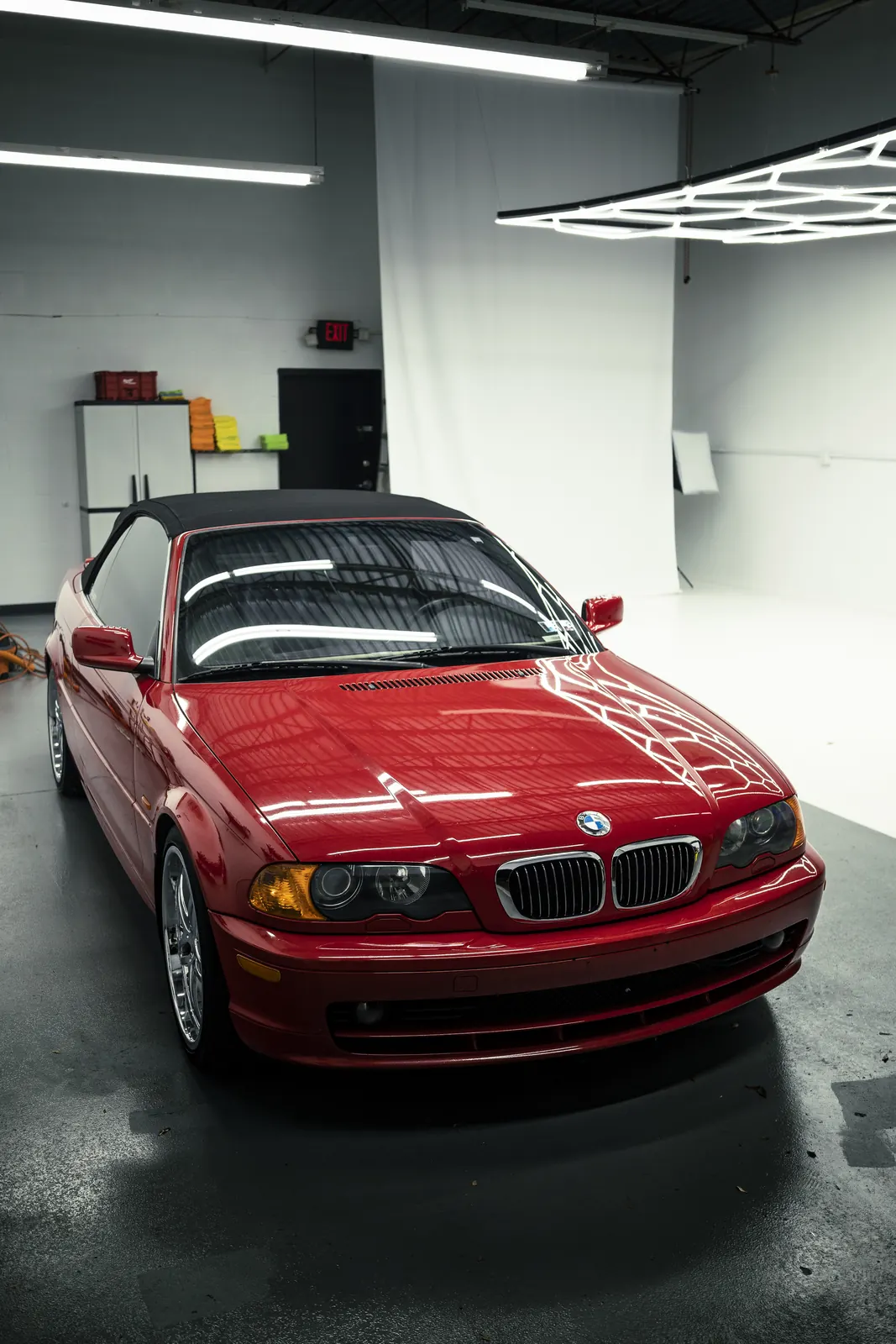
A ceramic coating is semi-permanent ceramic paint protection bonded to your clear coat: it repels water and contaminants, resists UV and chemicals, and makes maintenance dramatically easier. What it isn't — a substitute for paint correction.
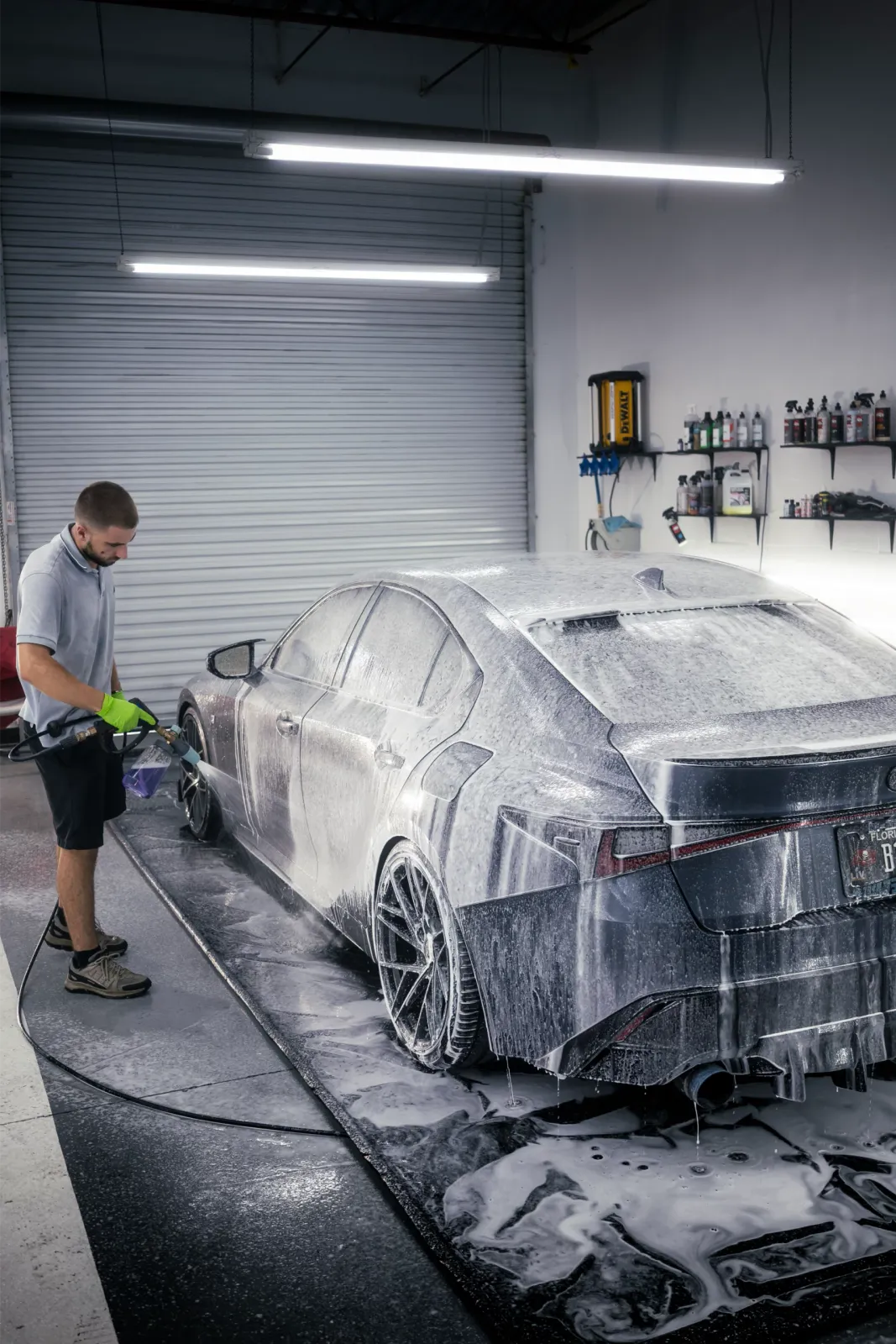
Chemical and mechanical decon strips iron, tar and embedded fallout so nothing gets sealed under the coating.
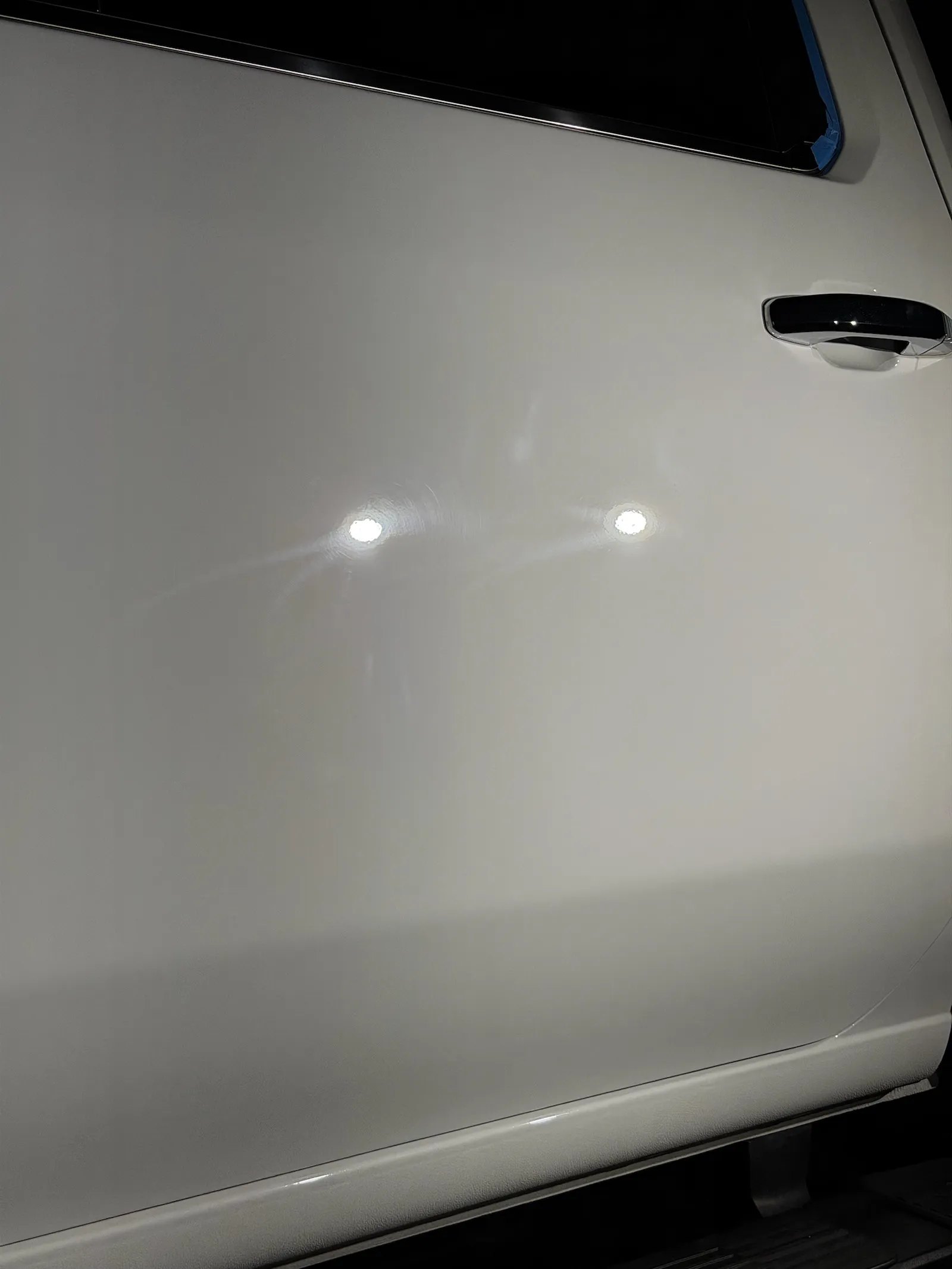
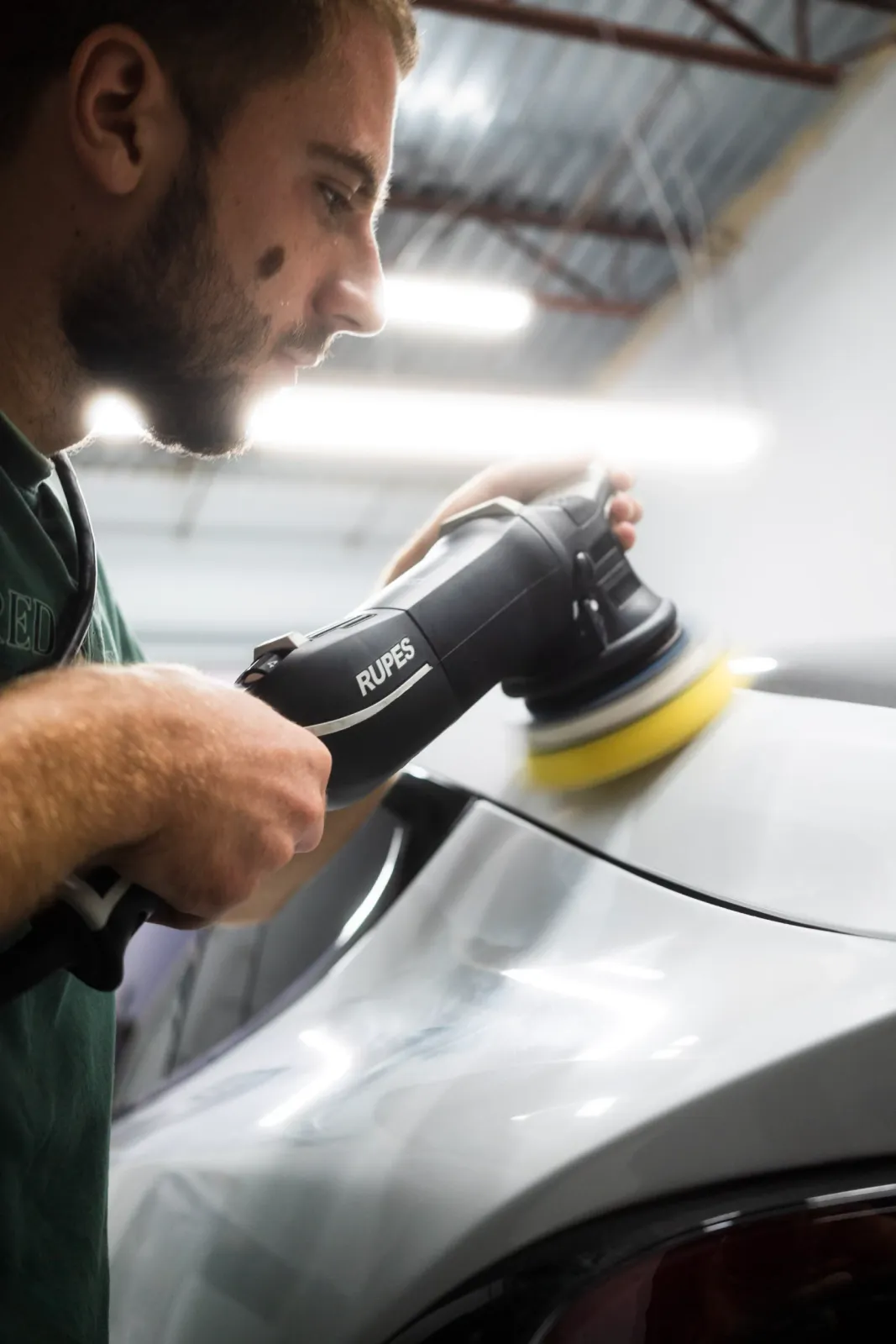
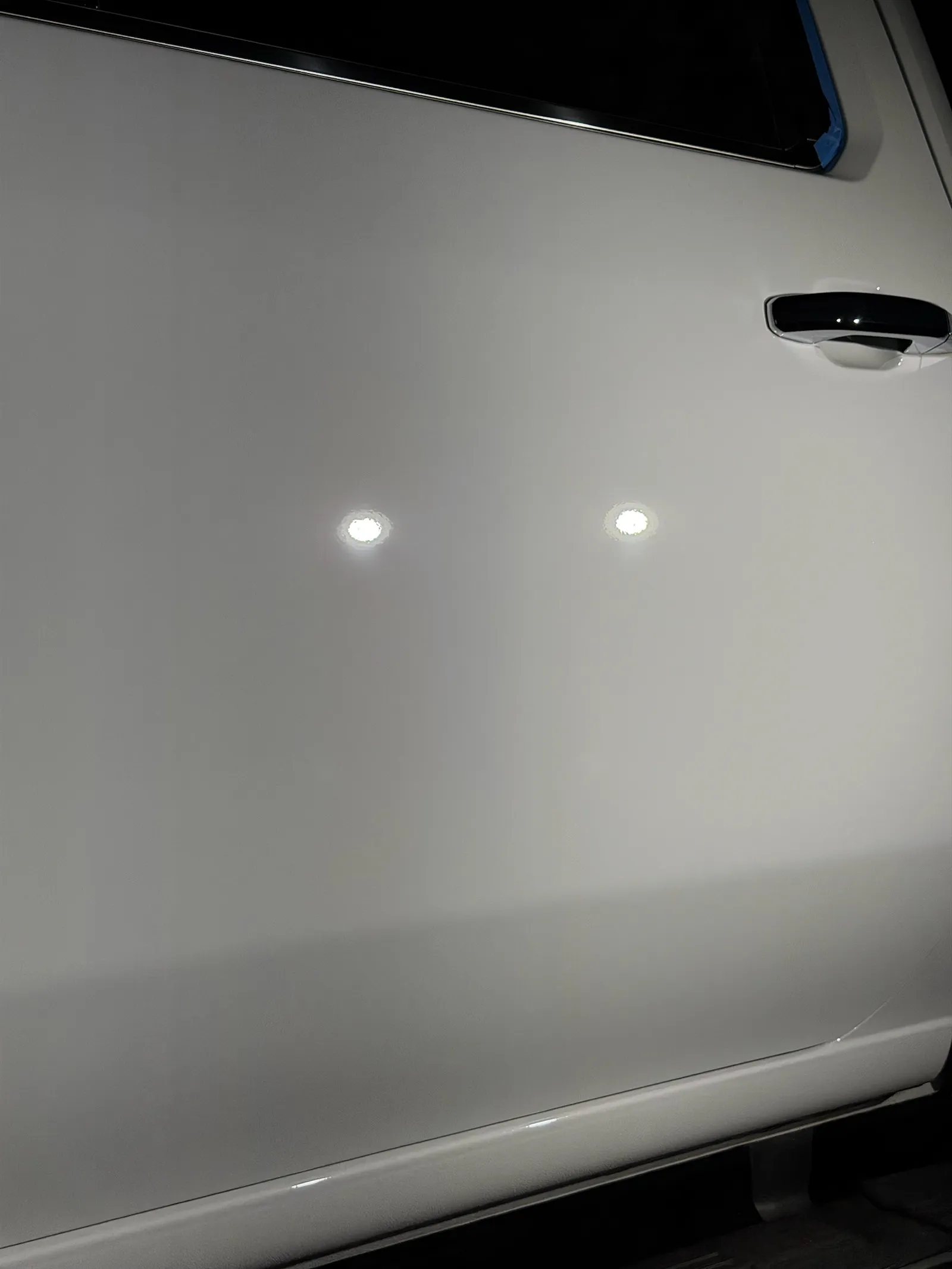
Multi-stage machine polish removes swirls and oxidation — the step that decides how the coating looks for years.
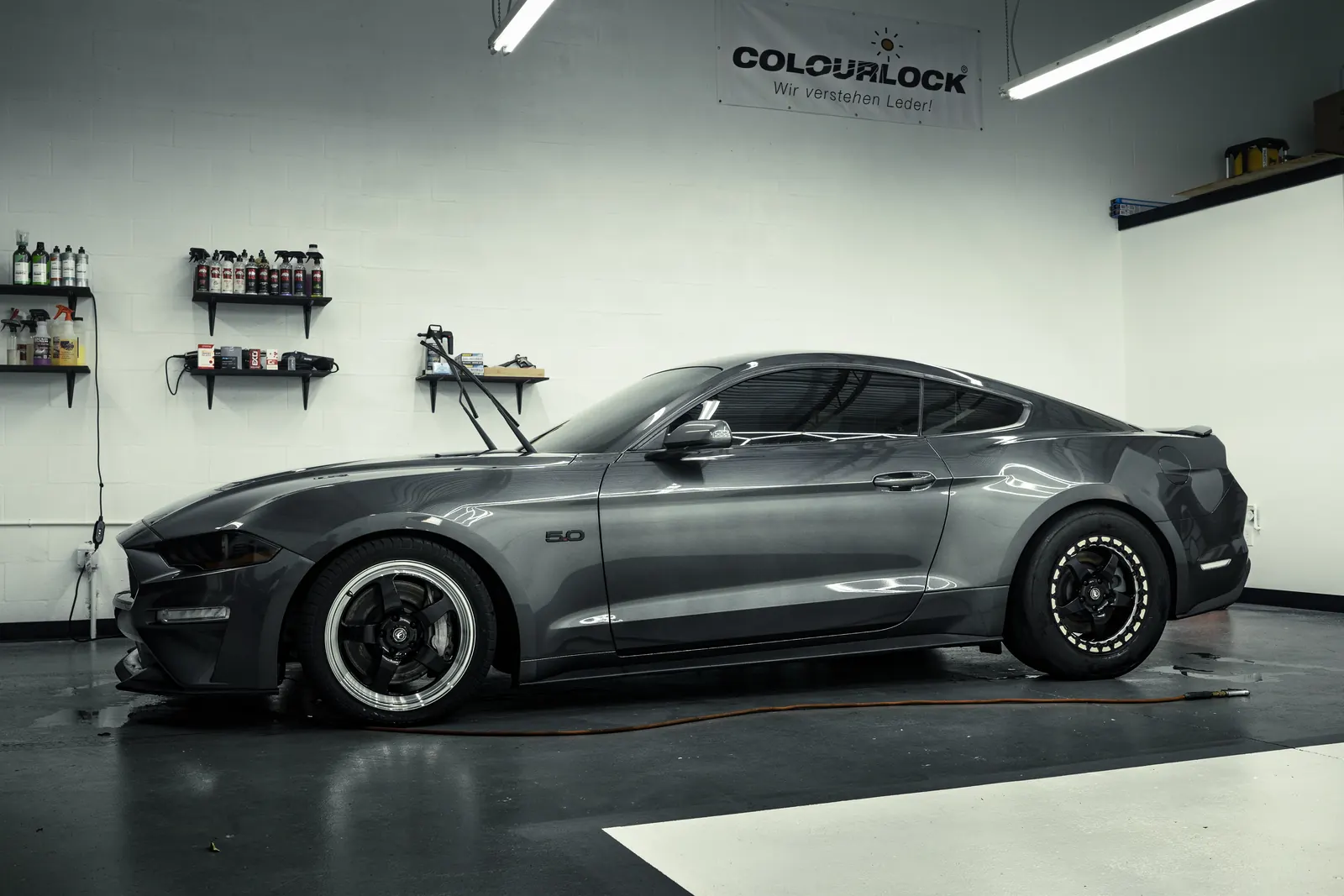
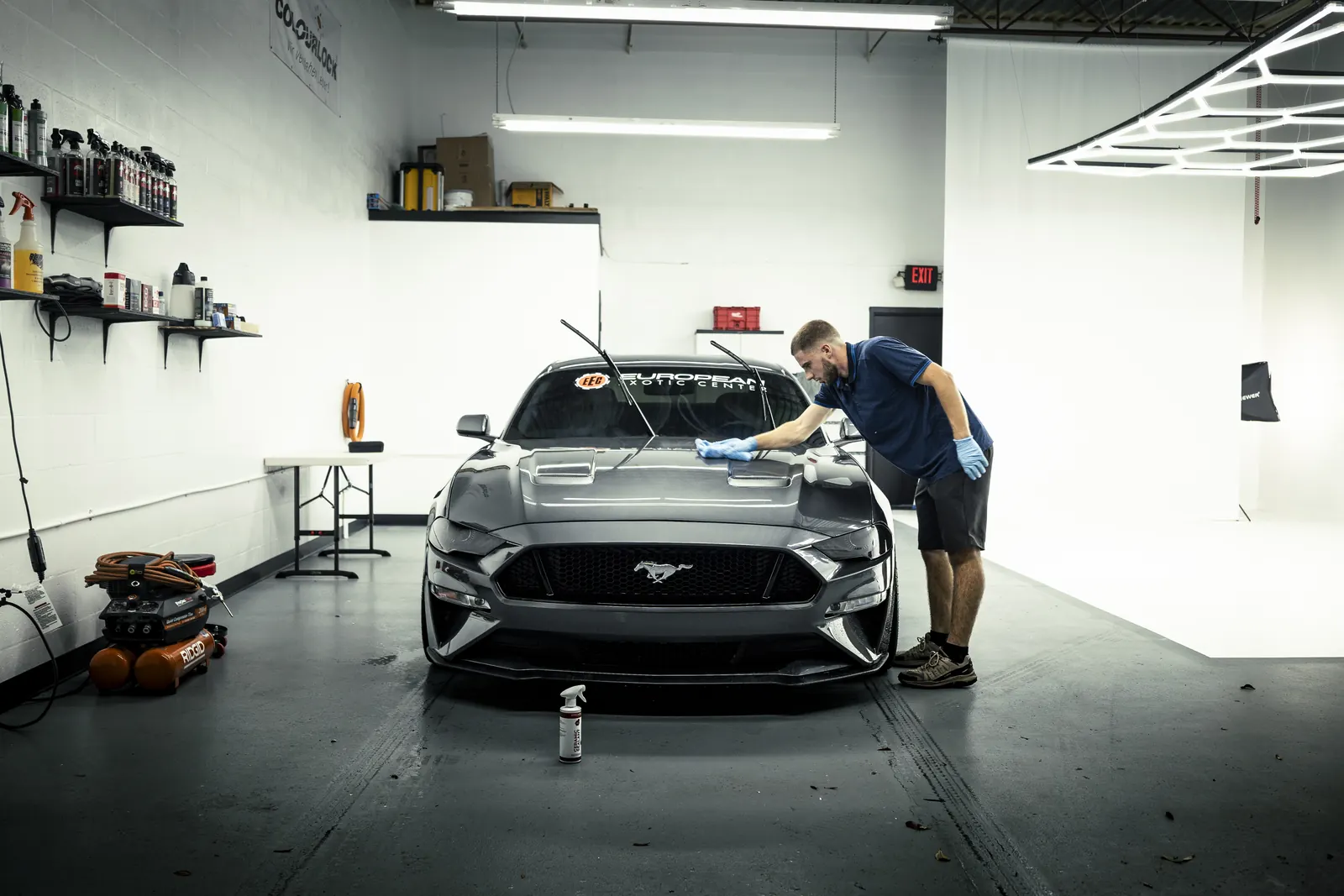
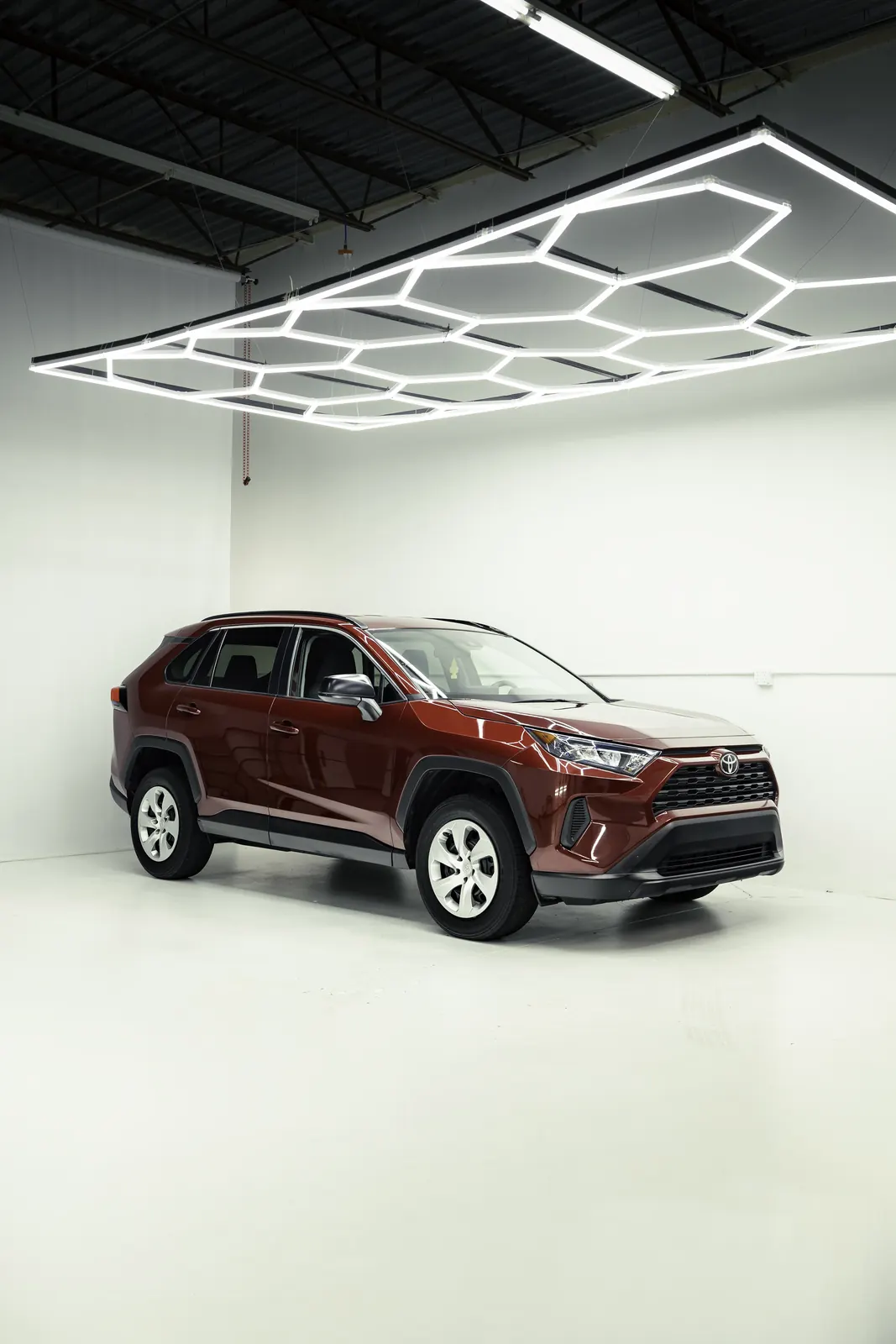
Applied panel by panel, leveled by hand, then cured indoors before the vehicle sees weather again.
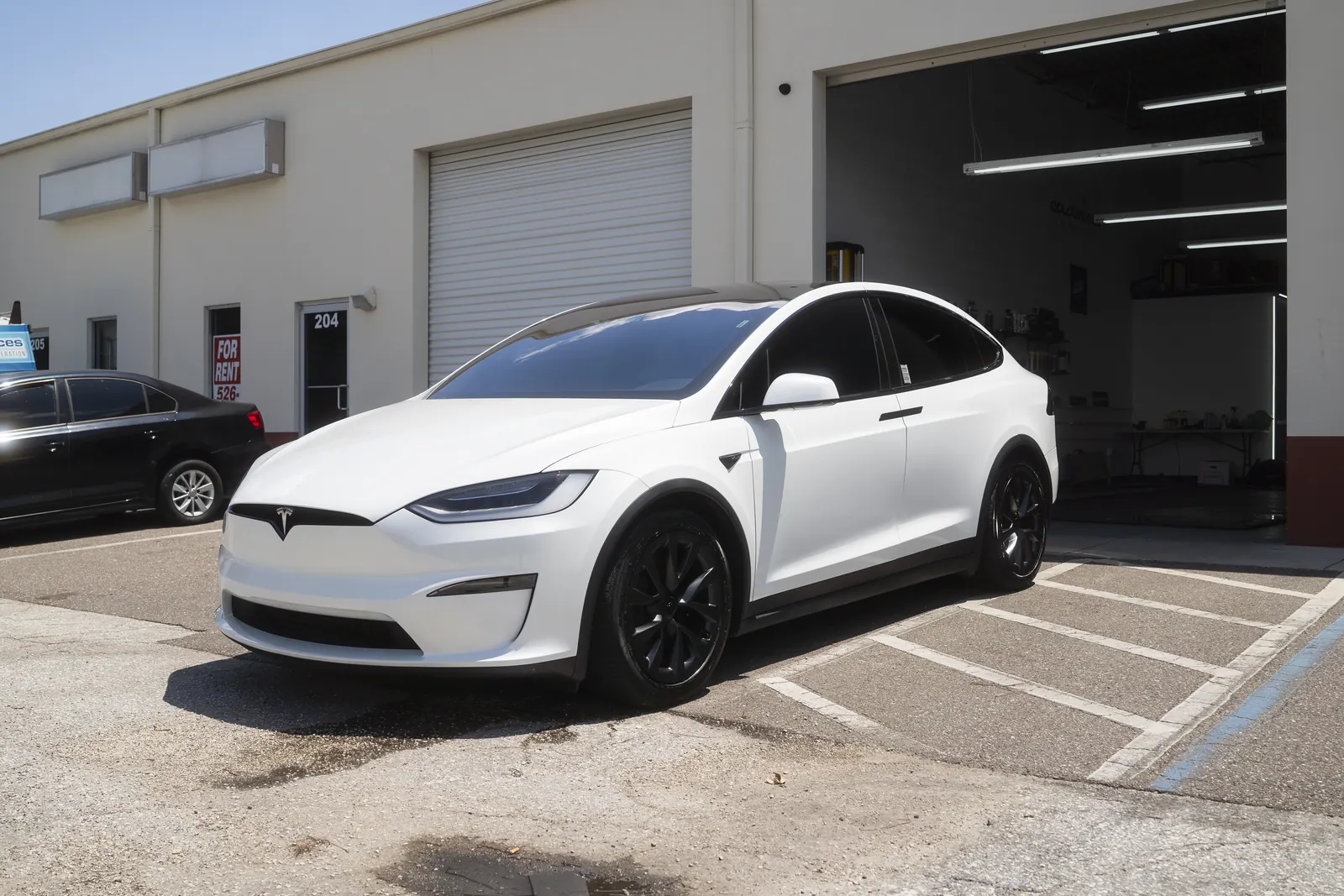
How to wash it, what to avoid, and when to come back for a maintenance check — walked through at pickup.
Professional coatings are rated in years, not months: typically 2 to 5+ depending on the product. Florida sun, salt air and how the car is washed decide where in that range yours lands. We go through the rated life of the coating at the consultation.
Almost always. A coating locks in whatever is underneath, swirls included, and makes them harder to fix later. We inspect the paint first and tell you whether it needs a light polish or a full multi-stage correction.
The coating cures indoors before pickup, but it keeps hardening for about a week. Skip washing for the first 7 days and avoid automatic washes entirely. We walk you through aftercare when you pick the car up.
Wax lasts weeks. A ceramic coating lasts years and makes washing easy, but it will not stop a rock chip. Paint protection film is a physical layer that absorbs chips and scratches. Many owners put film on the front end and coat the rest.
It depends on the vehicle's size and paint condition; correction is most of the labor. Every quote follows a free, in-person paint inspection, so the number reflects your car, not a guess.
For a car that lives outside here, usually yes. UV, salt air, lovebugs and summer rain spots all attack bare clear coat, and a coating lets each of them wash off instead of etching in. It isn't worth putting over paint that hasn't been corrected first.